-
 play_arrow
Radio Save The Planet Save The Planet
-
play_arrow
Electromusic FM RADIO ONLINE 24/7
-
 play_arrow
London Calling Podcast Yana Bolder



🌍 Earth Overshoot Day 2026: Why the Date Matters – And Why Progress Deserves the Headlines
30 July 2026 marks Earth Overshoot Day, the date on which humanity has theoretically used as many biological resources as the Earth can regenerate during the entire year. From this point onward, global resource demand exceeds the planet’s annual regenerative capacity. The date is calculated each year by the Global Footprint Network using data on ecological footprint and global biocapacity.
For many, Earth Overshoot Day is associated with alarming headlines.
At SaveThePlanet, we believe it should also be an opportunity to highlight something equally important:
the solutions that are already moving us in the right direction.
Understanding the Date
Earth Overshoot Day is not the day the Earth runs out of resources.
Instead, it is an indicator that compares humanity’s annual demand for renewable natural resources with what the planet can regenerate during the same year. It is designed as a communication tool to help illustrate global resource consumption trends.
This year’s date falls six days later than the date published for 2025. However, the Global Footprint Network stresses that this does not mean environmental pressure has decreased. Most of the shift results from updated scientific datasets—particularly revised estimates of the oceans’ carbon absorption capacity—while real-world consumption trends actually increased slightly.
That distinction matters.
It reminds us that sustainability depends on measurable actions, not simply on calendar dates.
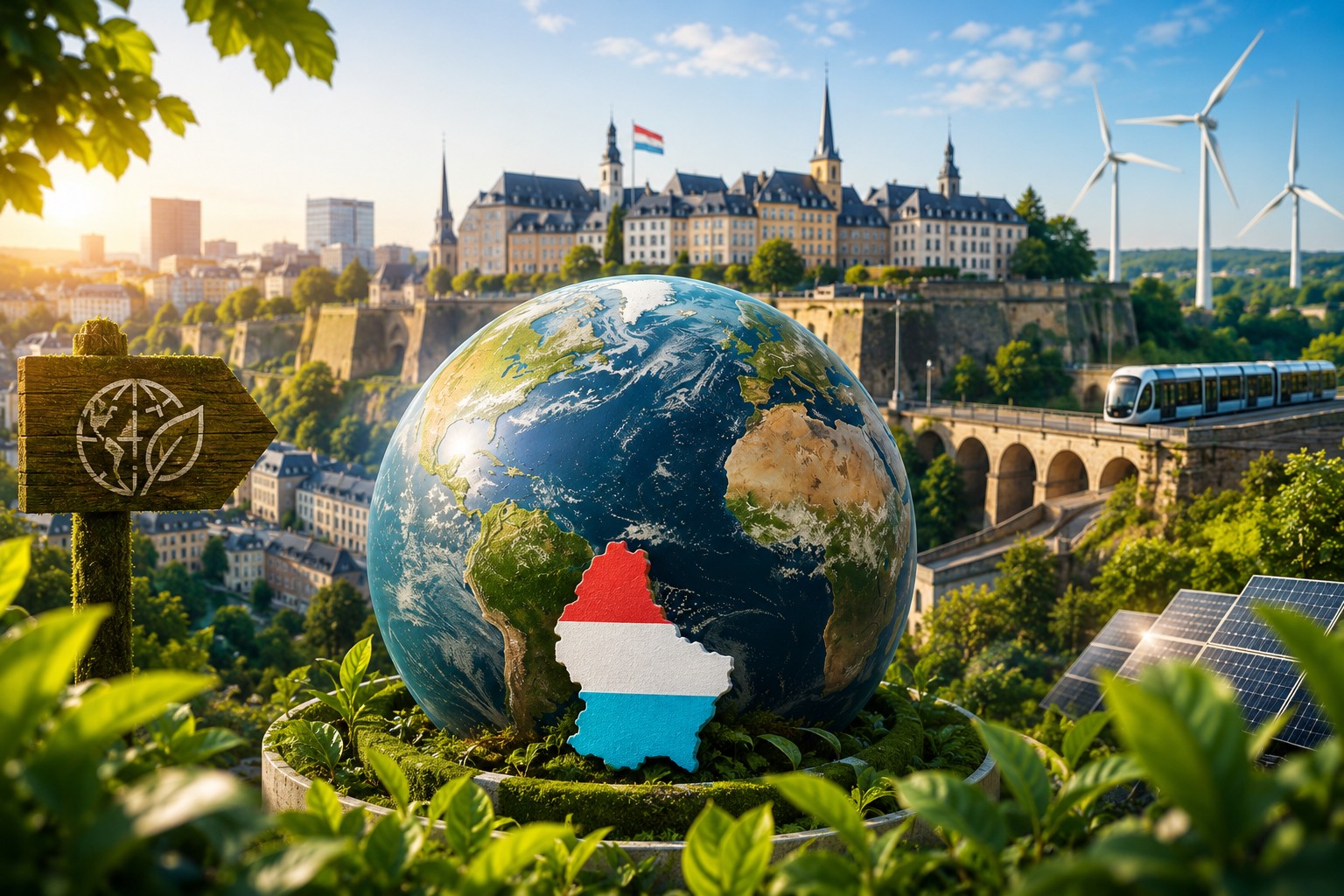
Luxembourg: Small Country, Big Opportunity
For Luxembourg, Earth Overshoot Day is particularly relevant.
As one of Europe’s most developed economies, the country has a relatively high ecological footprint per person, largely influenced by energy use, mobility and consumption patterns. Like many developed nations, Luxembourg faces the challenge of reducing its environmental impact while maintaining a high quality of life.
The good news is that Luxembourg is also well positioned to become part of the solution.
Investments in renewable energy, energy-efficient buildings, sustainable mobility, circular economy initiatives and green innovation continue to expand. Public institutions, businesses, universities and local communities are increasingly working together to improve resource efficiency and reduce emissions.
Progress Is Happening
Earth Overshoot Day often receives attention because of the challenge it represents.
Less attention is given to the remarkable progress already taking place around the world.
Examples include:
- Renewable energy has become one of the most cost-competitive forms of electricity generation in many markets.
- Battery technology continues to improve, making electric mobility and renewable energy storage increasingly practical.
- Modern buildings consume significantly less energy than previous generations thanks to improved insulation and smart technologies.
- Circular economy principles are encouraging companies to repair, recycle and reuse materials instead of simply replacing them.
- Precision agriculture helps farmers reduce water, fertilizer and pesticide use while maintaining productivity.
- Engineers and researchers continue developing lower-carbon industrial processes and more efficient manufacturing methods.
These developments may not make dramatic headlines every day—but together they represent real, measurable progress.
Why SaveThePlanet Covers Stories Like This
Our mission is not to ignore environmental challenges.
Our mission is to ensure that solutions receive as much attention as problems.
Every successful innovation, every community project, every company improving its processes and every scientific breakthrough deserves visibility.
Because positive examples inspire action.
Knowledge encourages innovation.
And innovation creates progress.
Looking Ahead
Earth Overshoot Day should not be viewed as a reason for pessimism.
It should be seen as an annual checkpoint—a reminder to measure where we stand, celebrate what is working and continue investing in solutions that move society forward.
At SaveThePlanet, we will continue highlighting the engineers, entrepreneurs, researchers, volunteers and communities proving every day that sustainable progress is not only possible—it is already happening.
Because a better future is built by sharing solutions, not only by reporting problems.